


 720-777-0123

-
Conditions & Advice

Parenting Tips and Advice
From bringing home a new baby to building trust with your teen, our pediatric experts share guidance to help you navigate the ups and downs of parenthood.
-
Your Visit
Click to find the locations nearest you
Find locations by region
See all locations -
Research & Innovation

It starts with a Q:
For the latest cutting-edge research, innovative collaborations and remarkable discoveries in child health, read stories from across all our areas of study in Q: Advances and Answers in Pediatric Health.


ParentSmart HealthlineTM
Caring pediatric nurses are available 24/7 to help answer your questions.
Send Postal Mail To:
Children’s Hospital Colorado
Anschutz Medical Campus
13123 East 16th Avenue
Aurora, CO 80045
Emergency and urgent care locations
In life-threatening emergencies, find the emergency room location nearest you. For non-life-threatening medical needs when your pediatrician is unavailable, visit one of our urgent care locations.
Urgent care locations (hours vary)
See all urgent care locationsNot sure if you need urgent or emergency care? Help me decide
All locations
See a listing of all our Children’s Hospital Colorado locations including inpatient, outpatient, therapy, surgery facilities and more.
Locations near you
See all locationsMore Options


Colorectal and Urogenital Care
Hirschsprung Disease
We see more, treat more and heal more kids than any other hospital in the region.


What is Hirschsprung disease?
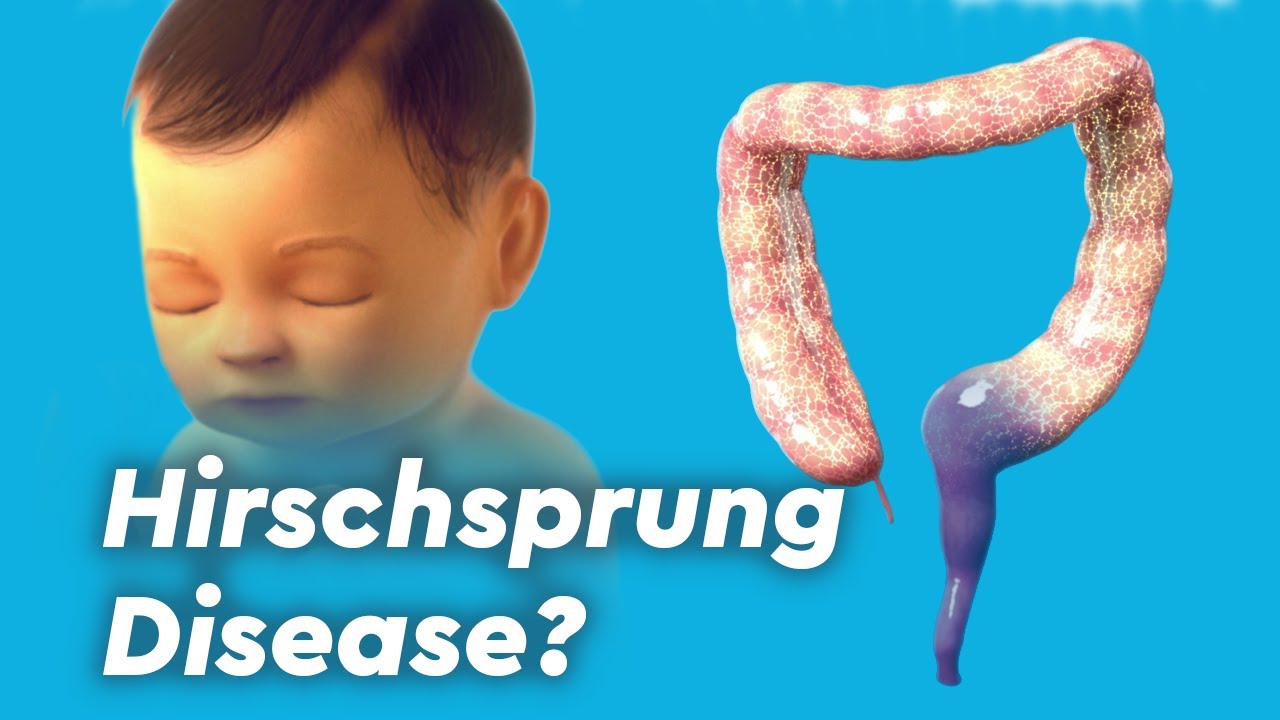
Hirschsprung disease is a congenital condition that causes an intestinal obstruction affecting the rectum. Because it is a congenital problem, meaning a person is born with it, newborns show symptoms of obstruction, including bilious emesis (vomiting bile, a greenish or yellowish fluid), not able to pass meconium (their first poop after being born), or constipation.
Hirschsprung disease affects the distal part of the large intestine, also called the rectum. Babies born with Hirschsprung disease do not have ganglion cells in the rectum, which are the nerve cells that regulate bowel movements. This is also known as aganglionosis.
When a baby has Hirschsprung disease, they can't poop. This inability to poop is very uncomfortable for the baby and can cause the abdomen to expand and swell, which is known as abdominal distension. A blocked or obstructed colon can also lead to vomiting and inflammation of the colon, or colitis. If the problem is not addressed, this can cause infections and eventually lead to death.
Hirschsprung disease varies widely between patients depending on how much of the colon is affected by aganglionosis. To treat Hirschsprung disease, the affected part of the colon must be removed through surgery.
What causes Hirschsprung disease in babies?
Hirschsprung disease is the result of a disorder that starts when the baby is developing inside the womb. This disorder affects the enteric nervous system, which controls the function of the gastrointestinal tract from the esophagus to the anus. The enteric nervous system helps swallowed food move into your stomach, where it is broken down and digested, then through your small and large intestine, and eventually out of your body as stool.
During the development of a baby with Hirschsprung disease, the large intestine does not fully develop, and the nerve cells that usually form on the intestine do not form. The reason for this is unknown. Without these cells, the colon cannot pass the stool and it begins to build up.
Who gets Hirschsprung disease?
Hirschsprung disease affects about 1 in every 5,000 newborns. The disease can be genetic, meaning that it can be passed down from a parent or relative. Hirschsprung disease is four times more common in boys than it is in girls.
Why choose us for treatment of Hirschsprung disease?
At Children's Colorado, our International Center for Colorectal and Urogenital Care is known worldwide for advancing the treatment for Hirschsprung disease. Our colorectal surgeons have extensive experience diagnosing and treating babies and children with this rare and lifelong condition. Pediatric colorectal surgeon, Luis De la Torre, MD, who specializes in treating Hirschsprung disease, developed a new technique using a transanal approach, which is now used in hospitals around the world to treat Hirschsprung disease. This pull-through technique is known as the "De la Torre pull-through."
Our caregivers are among the most experienced surgeons focusing on Hirschsprung disease today. Their extensive experience has come after more than 1,500 operations on patients with widely ranging forms of Hirschsprung disease. Children's Colorado continues to lead treatment for this disease and other colorectal conditions.
In addition to having the foremost experts in colorectal surgery, we use the most advanced technology available. By combining specialized expertise with the newest machines and equipment, we offer the best treatment and care for every patient.
What are the signs and symptoms of Hirschsprung disease in babies and kids?
One of the first signs that a newborn baby may have Hirschsprung disease is that their first bowel movement is delayed by more than 24 hours. When a baby is born, they typically poop within the first 24 hours. If it takes longer — especially longer than 48 hours — this may be a sign that their colon is blocked.
Not having normal bowel movements can cause a wide range of complications, including abdominal distension, fever, vomiting, dehydration and colitis. This range of symptoms can make diagnosing Hirschsprung disease more difficult.
What tests are used to diagnose Hirschsprung disease?
If a baby displays the signs and symptoms of Hirschsprung disease, doctors will perform the following tests to reach a diagnosis:
- X-ray of the abdomen and colon: In Hirschsprung disease, the part of the intestine that is missing ganglion cells will appear shrunken and the area above will appear bloated, as it is most likely backed up with digested food and stool.
- Rectal biopsy: Doctors will take a small sample of the rectum and examine it under a microscope to confirm the absence of ganglion cells. The absence of these nerve cells is a sign of Hirschsprung disease.
- X-ray with contrast enema: Doctors will take another X-ray adding a contrast enema with liquid such as iodine to produce a more detailed version of the image. This detailed image will help the surgeon decide what type of operation will be best for treatment.
At Children's Colorado, our team has extensive experience testing babies and children for Hirschsprung disease. We use the most advanced technology available to ensure we produce accurate test results in the least disruptive way possible.
What to expect from Hirschsprung disease testing
Rectal biopsy for Hirschsprung disease
The rectal biopsy for a baby less than 3 months old uses a modern device specifically designed for newborns. In this procedure, your child’s doctor takes a small tissue sample of the rectum and examine it under a microscope. If the patient is older than 3 months, we will perform the procedure using anesthesia. Test results are usually available within 48 hours.
X-ray with contrast enema for Hirschsprung disease
Our radiologists will perform the contrast enema together with our child life team, a group of medical professionals who help ease the stress and anxiety of medical procedures for kids. The contrast enema for Hirschsprung disease takes about 20 minutes. We will explain the results with caregivers that same day.
How do we treat Hirschsprung disease, or aganglionosis affecting rectum?
Treatment for Hirschsprung disease depends on the type — there is short- and long-segment Hirschsprung disease. For short Hirschsprung disease, procedures may vary for each patient but the basic surgery typically includes four steps:
- Clearing the initial obstruction in the colon or rectum to relieve pressure and allow stool and gas to pass through.
- Removing the aganglionic section (area missing ganglion cells) of the colon.
- Connecting the healthy part of the colon to the rectum to establish a way to pass stool.
- Closing the incision.
Steps 2 and 3 make up what is called the "pull-through procedure." This operation is performed using the transanal Soave, or transanal Swenson pull-through, or some variation of this technique. This is the most common surgical procedure used to treat Hirschsprung disease.
How do we treat aganglionosis affecting rectum, sigmoid and left colon or long-segment Hirschsprung disease?
For long-segment Hirschsprung disease, surgical treatment has multiple steps:
- We create a colostomy at the level where the ganglion cells are present.
- Three to six months later, we perform the pull-through procedure. We use special maneuvers such as de-rotation of the colon (Deloyer’s procedure) when the aganglionosis affects the proximal transverse colon.
We also use a multi-step process to treat total colonic aganglionosis that affects the entire colon:
- We create an ileostomy at birth
- After the patient has achieved full urinary control (they are dry day and night and use regular underwear), we perform the pull-through procedure using the small bowel. This operation usually occurs at 3 to 4 years of age.
What problems may occur after the surgery?
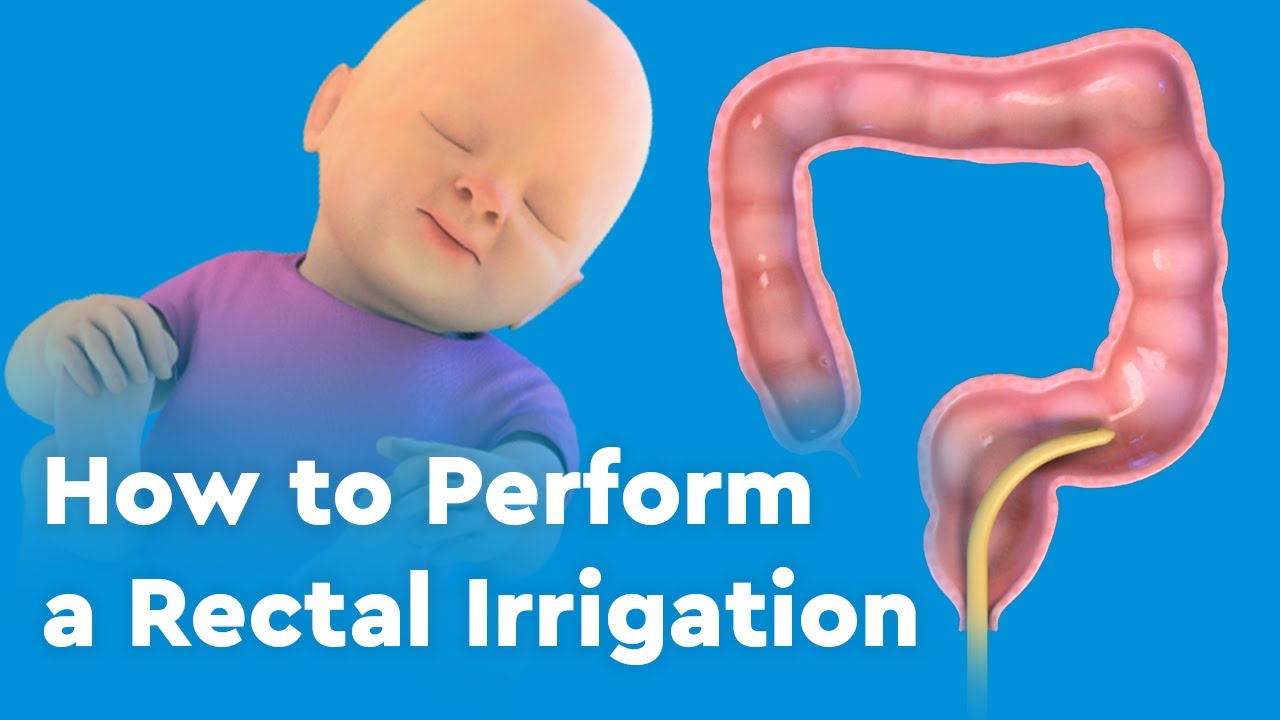
Approximately 50% of patients have postoperative obstructive problems that occur at any time after surgery. These are constipation and Hirschsprung-associated enterocolitis. This enterocolitis is an inflammation, so your child may need rectal irrigations to help them pass stool. Watch the video below to learn the steps and equipment required to perform rectal irrigation for children with Hirschsprung disease.
Helpful Resources
To learn more about Hirschsprung disease, we recommend the following resources:
- The National Organization for Rare Disorders (NORD): A nonprofit patient advocacy organization dedicated to individuals with rare diseases and the organizations that serve them
- The Pull-Thru Network: A volunteer-based nonprofit organization dedicated to providing support and education to families and others affected with congenital anorectal, colorectal and urogenital disorders and any other associated diagnosis
- Colorectal Support Network: A closed group on Facebook made up of parents and patients with congenital colorectal conditions that offer support to each other
Next steps
-
Would you like to learn more about us?
Learn more about the International Center for Colorectal and Urogenital Care Department -
Do you have questions about your child’s condition?
720-777-9880 -
Want a second opinion?
Get started

Stories
Everett
Everett’s first surgery for Hirschsprung disease in California caused as many problems as it solved. After his parents found our colorectal experts, everything changed and he now has the health and freedom to be a kid.