


 720-777-0123

-
Conditions & Advice

Parenting Tips and Advice
From bringing home a new baby to building trust with your teen, our pediatric experts share guidance to help you navigate the ups and downs of parenthood.
-
Your Visit
Click to find the locations nearest you
Find locations by region
See all locations -
Research & Innovation

It starts with a Q:
For the latest cutting-edge research, innovative collaborations and remarkable discoveries in child health, read stories from across all our areas of study in Q: Advances and Answers in Pediatric Health.


ParentSmart HealthlineTM
Caring pediatric nurses are available 24/7 to help answer your questions.
Send Postal Mail To:
Children’s Hospital Colorado
Anschutz Medical Campus
13123 East 16th Avenue
Aurora, CO 80045
Emergency and urgent care locations
In life-threatening emergencies, find the emergency room location nearest you. For non-life-threatening medical needs when your pediatrician is unavailable, visit one of our urgent care locations.
Urgent care locations (hours vary)
See all urgent care locationsNot sure if you need urgent or emergency care? Help me decide
All locations
See a listing of all our Children’s Hospital Colorado locations including inpatient, outpatient, therapy, surgery facilities and more.
Locations near you
See all locationsMore Options


Winter Weather Alert
Children's Hospital Colorado is closely monitoring the winter storm that is impacting Colorado. Community safety is our top priority, and we will keep you updated as new information becomes available. Visit our weather page for more information on the latest closures and modified hours.


As a leading children’s hospital, we are constantly looking for ways to improve treatment. This can mean exploring innovative technology, researching new medications or updating surgical techniques. With the latest technology and medical expertise, we can shorten hospital stays, reduce pain and use smaller incisions, while making surgery safer and more effective. Robot-assisted surgery can help us perform operations that are not possible with traditional surgical techniques.
600+
Orthopedic surgeries using our Mazor X robot
250+
Neurologic surgeries using our ROSA robot
150+
Gynecologic, pediatric and urologic surgeries using our Intuitive da Vinci Xi robot
What is robot-assisted surgery?
Robotic surgery does not replace the surgeon but instead provides our experienced surgeons with additional tools to help them perform successful surgeries using the most advanced surgical technology.
Robotic surgery gives our surgeons more control and precision, which allows them to perform more complicated movements. Robots help our surgeons complete multiple tasks with several instruments at once, while giving them a more accurate view through high-definition imaging. Robot-assisted surgery even enables our surgeons to perform surgeries that are too complex for traditional surgical techniques.
At Children’s Hospital Colorado, we use robots to assist our surgeons and operating room teams to provide minimally invasive surgeries across many specialties. As the leading children’s hospital in the Rocky Mountain region performing robot-assisted pediatric surgery, we can obtain the highest level of surgical precision and safety.
What are the advantages to robotic surgery?
Robotic surgery has many documented benefits, including:
- Greater consistency and precision
- Reduced pain during recovery
- Reduced blood loss during surgery
- Smaller incisions and faster healing times
- Potentially shorter hospital stays
- Lower readmission and reoperation rates
- Improved clinical outcomes
- Improved overall experience
- Faster return to normal activities
Who we treat with robot-assisted surgery
We do not offer robotic surgery for every type of surgery and only use this technology when it produces the absolute best outcomes for kids. This means that even with the same type of surgery, the decision to use robotic surgery may change based on your child’s unique condition and situation. We’re constantly using robotic assistance in more surgeries as appropriate. We have already performed robot-assisted surgeries for a variety of specialties:
Pediatric surgery
- General
- Anti-reflux surgery (e.g., Nissen fundoplication)
- Cholecystectomy for gallbladder disease
- Choledochal cyst excision with hepaticoduodenostomy reconstruction
- Hernia repairs (inguinal and ventral hernias)
- Splenectomy
- Inflammatory bowel disease/total proctocolectomy with ileal pouch–anal anastomosis (J pouch) for ulcerative colitis
- Ileocecal resection (ileocecectomy) for Crohn’s disease
- Colorectal
- Appendicostomy (Malone) procedure for fecal incontinence
- Pull-through procedure for Hirschsprung's disease
- Total proctocolectomy with ileal pouch–anal anastomosis (J pouch) for ulcerative colitis
- Bariatric
- Sleeve gastrectomy for severe obesity
Orthopedic and spine surgery
Urologic surgery
-
- Orchiopexy
- Pyeloplasty
Adding to our minimally invasive surgery program
As we expand our capabilities with robotic surgery, we can perform surgeries for children using techniques that were traditionally reserved for adults. Still, we are extremely careful in evaluating which surgeries would benefit from robotic assistance. We only use our surgical robots for procedures when they clearly benefit children, such as faster healing or less pain during recovery.
Meet our surgical robots
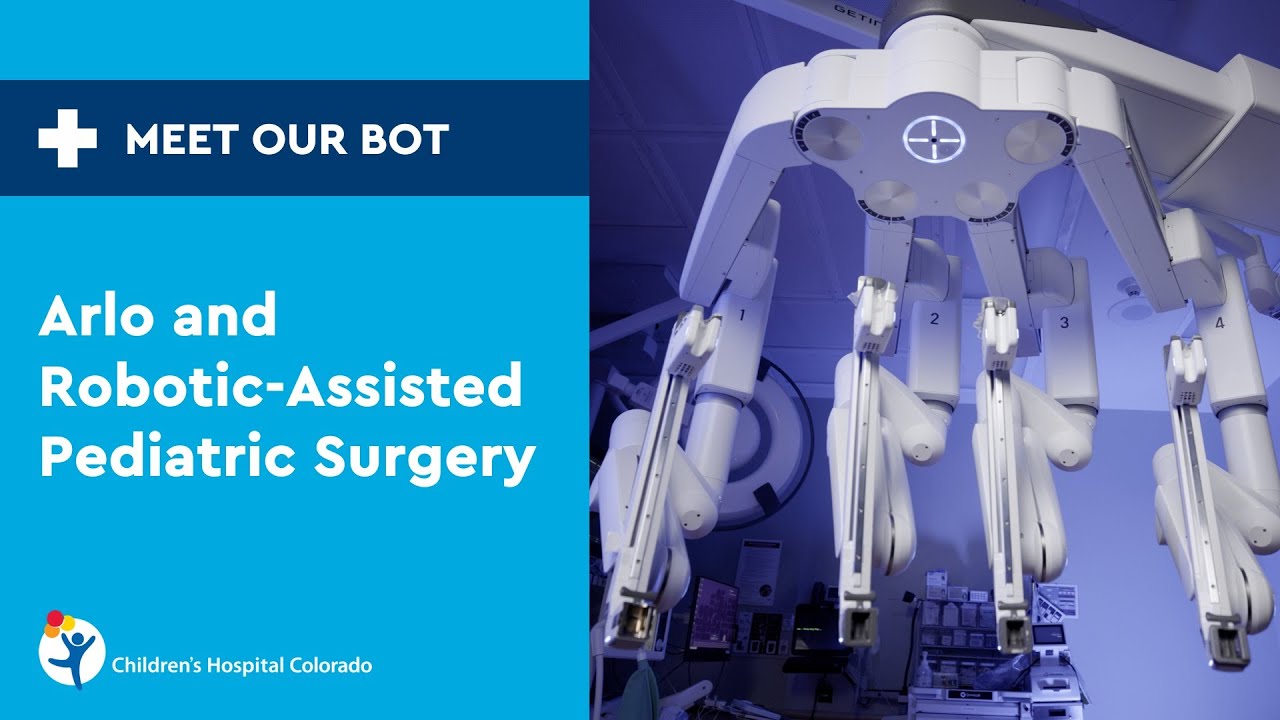
Intuitive da Vinci Xi
Our da Vinci Xi robot gives our surgeons more accuracy, control and precision. The da Vinci robot offers several advantages to traditional laparoscopic surgery, including:
- Improved vision: A magnified (up to 10x), 3D, high-definition view (compared to the 2D view in traditional laparoscopy) with better depth perception. This allows for better visualization and more precise tissue handling and dissection.
- Greater dexterity: The four robotic arms have the same range of motion of the human wrist — far beyond the limited motion of laparoscopic instruments. The robot also eliminates any tremors for steadier movements and more precise control.
- Improved ergonomics and movement: The console allows surgeons to sit while operating, reducing fatigue. The intuitive control system gives our surgeons better access and creates more efficient and safer surgeries.
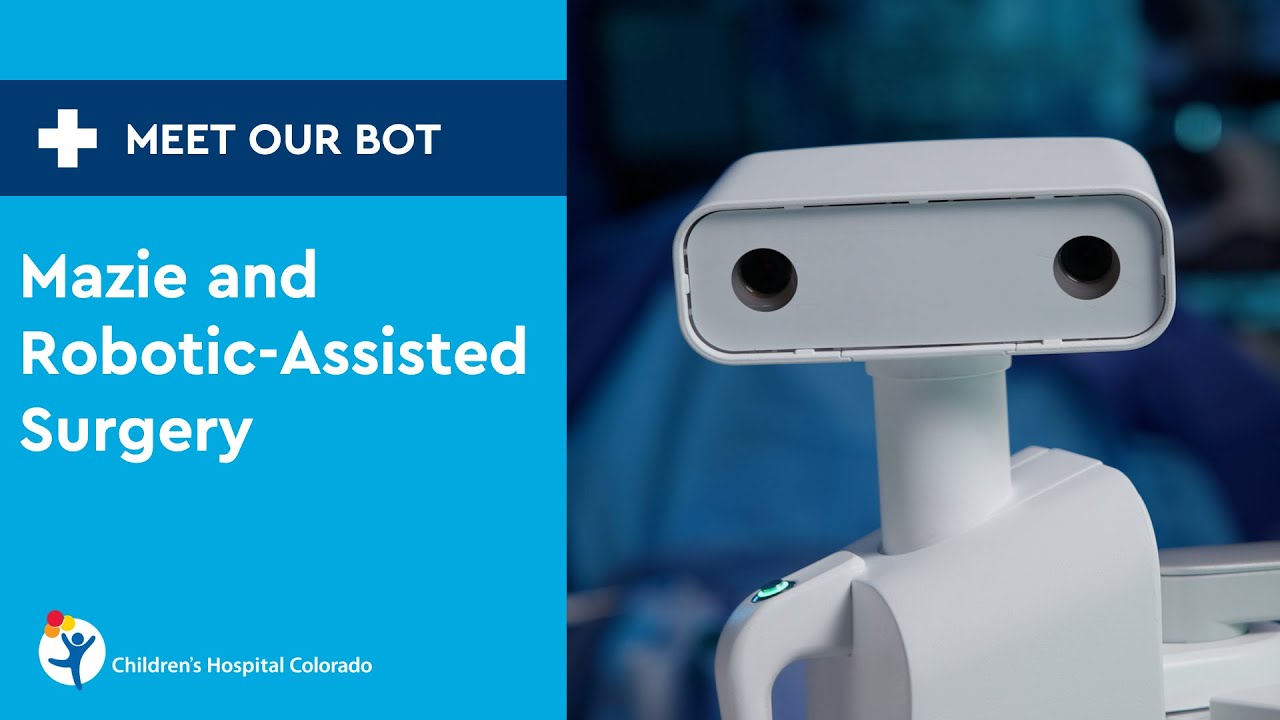
Mazor X
Our Mazor X robot reads imported X-rays to ensure we place spine implants as precisely as possible. The Mazor X robot offers several advantages to traditional spine surgery, including:
- Enhanced precision: The robot provides more precise screw placement, which is especially important for children with complex spinal conditions and for revision surgeries. This improved accuracy helps reduce the risks of nerve damage, spinal cord injury and implant misplacement, which contributes to a lower rate of surgical complications and reoperations.
- Advanced planning: Surgeons can use 3D imaging and planning software to create a custom surgical plan before entering the operating room, which allows for better visualization and strategic decision-making.
- Reduced radiation: The system reduces the need for X-ray, lowering radiation exposure for both the surgical team and child.
ROSA
Our ROSA surgical robot can help us across multiple specialties, but we use it mostly for neurosurgery. It helps for procedures like stereotactic electroencephalography, brain biopsies and deep brain stimulation. The ROSA robot offers several advantages to traditional neurosurgical techniques, including:
- Accuracy: It provides precise guidance for several neurosurgical procedures including electrode implantation, brain tumor biopsies and deep brain stimulation, lowering the risk of misplaced implants and non-diagnostic biopsy specimens.
- Precise planning: Advanced software helps surgeons plan to operate on regions deep in the brain while protecting brain tissue and avoiding blood vessels.
- Surgical approaches: The ROSA robot allows for more minimally invasive approaches due to its accuracy and pre-surgery planning software.
Information about robotic surgery services
The Robotic Surgery Program operates from our location at Anschutz Medical Campus in Aurora. Our leaders include:
- Director Jonathan Hills-Dunlap, MD, pediatric surgery
- Associate Director Brian Caldwell, MD, urologic surgery
- Veronica Alaniz, MD, MPH, gynecologic surgery
- Todd Hankinson, MD, neurosurgery
For information about the Robotic Surgery Program, please call us at 720-777-1234.
Get to know our pediatric experts

Jonathan Hills-Dunlap, MD, MPH
Surgery - Pediatric, Surgery

Brian Caldwell, MD
Urology - Pediatric, Urology

Veronica Alaniz, MD, MPH
Ob/Gyn Obstetrics & Gynecology

Todd Hankinson, MD
Neurosurgery, Neurosurgery - Pediatric