



 720-777-0123






Every child at risk for suicide has a story. But no two stories are the same. And sometimes, those at most risk don’t present with one clear warning sign.
Often, it’s revealed in hindsight, scattered across years of medical history. Imagine being able to recognize those signals earlier and intervene when it matters most. Pediatric psychiatrist Joel Stoddard, MD, has spent years trying to advance suicide risk prediction capabilities through machine learning. Now, with new risk classifications, the team is closer than ever to turning that vision into reality.
Identifying suicide risk classifications
In 2025, Dr. Stoddard and researchers at the Pediatric Mental Health Institute published research in the Journal of the American Academy of Child and Adolescent Psychiatry classifying youth who died by suicide: crisis, disclosing, hidden, identified and surveillance.
Drawing from the stories of over 10,000 young people over a 10-year period, researchers looked beyond single warning signs. Instead, they identified patterns of experience, risk factors, healthcare encounters and circumstances surrounding their deaths.
While analyzing the data, they uncovered a harrowing statistic — about half of all youth who died by suicide did not have a known mental health issue. About a quarter fell into the hidden category. This means they had no clinical contact or known risk of suicide, making these young people difficult to identify before a crisis occurred.
“We want to identify individuals who need help and are at risk outside of our traditional suicide risk detection,” Dr. Stoddard says. “Right now, we ask people if they’re at risk in a few settings. What we want is to identify people who might be at imminent risk when they don't identify themselves."
The characteristics of each classification
The five classifications offer a framework to understand different young people at risk. They’re defined as:
- Class 1, Crisis: These young people experienced a standalone acute interpersonal or school-related crisis. They did not present with prior suicidal thoughts or behaviors or med-psych challenges. This group of youth is very familiar to hospital emergency providers, as a crisis could be a common first reason for medical admission.
- Class 2, Disclosing: These young people told someone about their suicidal thoughts. When people express distress, it is important for trusted adults to pay attention to their words and take appropriate next steps. This classification reveals a need for improved education around resources and interventions available to youth who disclose thoughts of suicide.
- Class 3, Hidden: These young people did not have any recorded risk factors and have minimal contact with the healthcare system. These youth could often be identified in the healthcare system with direct screening while presenting with other general medical issues (such as a broken arm) because their risk of suicide is not obvious. Most of these young people were predominantly male and more likely to die by firearms.
- Class 4, Identified: These young people experience chronic crises and familial challenges and/or were often in mental health system. Most of these young people were female and died by asphyxia or ingestion.
- Class 5, Surveillance: These young people were identified as having died by suicide through the state or local county coroner’s reporting, with no other reportable information shared about their death. When there are systematic gaps in reports to the Centers for Disease Control and Prevention by the state, a youth may be classified in this way.
Why classifications matter for AI prediction
Traditionally, suicide risk prediction has focused on a variable centered approach, highlighting individual factors such as history of suicide attempts, depression or substance abuse. Dr. Stoddard says these new classifications try to understand risk using a person-centered approach. For example, someone may come into the emergency department with a reported suicide attempt three years ago. If they’re not experiencing suicidal thoughts, related symptoms or other risk factors, their level of risk is different than someone in an acute crisis.
“You can’t just use past suicide attempts as a risk factor,” Dr. Stoddard says. “You have to understand the constellation of risk factors for an individual. The classifications are a disciplined way of understanding what constellations are readily identifiable."
Together, the classifications, along with more data inputs, are advancing the team’s predictive modeling efforts. Dr. Stoddard and the team started using artificial intelligence (AI) to predict suicide risk in kids in 2023. Since then, they’ve expanded the database 10-fold. It now includes patients with contact with Children’s Colorado through ambulatory services, the emergency department and more.
“If we keep predicting on the same things, or using the same knowledge, we aren’t going to move the needle,” Dr. Stoddard says.
By combining this classification research with machine learning and electronic health record data, Dr. Stoddard hopes to improve prediction risk and identify kids who may currently be falling through the cracks.
“I expect that we’ll begin to chip away and make a meaningful impact on the group where there's no prior disclosure. We’re going to leapfrog. The data we have now is the most advanced. We’re on the bleeding edge of identifying youth at risk,” Dr. Stoddard says.
Clinical implications of AI powered predictions
Ultimately, Dr. Stoddard envisions a future in which AI helps clinicians connect the dots across years of health records, identify patterns of risk and even flag providers during a patient visit to refer them to a mental health specialist.
“If we’re going to make a dent in our very high suicide rate, we’re going to need to do new things. This includes applying robust simple models to integrate clinical risk factors that clinicians may not otherwise appreciate at the point of care,” Dr. Stoddard says.
AI powered predictive tools represent another promising innovation in suicide prevention, with the potential to save even more lives. Until these technologies become widely available, clinicians should continue to use evidence-based screening tools such as the ASQ (Ask-Suicide-Screening Questions) alongside insights provided by the new classifications to help identify individuals at risk.
“We need to let go of any prior biases of suicide. Suicide is not just an issue for mental healthcare settings,” Dr. Stoddard says. “The progression of risk can happen rapidly.”
As the group continues to refine risk factors and train their AI models, researchers remain laser focused on the mission – identify, intervene and support those who need it most.
“Hopefully we’ll meet in another three years and say, ‘Look at what we’ve accomplished together,’” Dr. Stoddard says.
Featured researcher
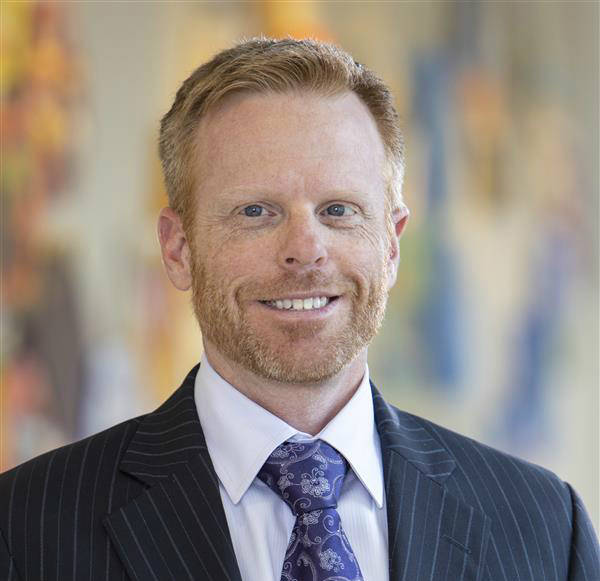
Joel Stoddard, MD
Child and adolescent psychiatrist
Children's Hospital Colorado
Associate professor
Psychiatry-Child-CHC
University of Colorado School of Medicine


