



 720-777-0123






Many kids have a needle phobia. Whether it’s for a vaccine, a blood draw or another medical purpose, needle pokes can cause pain and stress. Some kids carry fears from past experiences, and others feel nervous because they don’t know what to expect.
You can help your child feel calm, confident and more in control during their next doctor's visit. With the right tools and support, your child can face their fear and walk away feeling proud.
Understand the fear of needles
The fear of needles and shots is very common. Jennifer Liska, a child life specialist and department educator at Children’s Hospital Colorado, points out that some kids remember tough medical situations that make future appointments difficult. “If we don’t reframe negative experiences, or create positive ones, fear gets worse,” she says.
Megan Fisher, a Children’s Colorado child life educator, notes that it’s not necessarily the pain that sticks with the kids, but the overall experience — an idea which she urges doctors and caregivers to keep in mind. “Pain may last a second, but trauma lasts a lot longer. If we ignore pain or fear, kids can lose a sense of trust,” she explains.
It’s important to support kids and recognize their fears. Parents and caregivers can help their children with coping strategies that can make an impact not just in the moment, but in the future too.
Liska also recognizes that ensuring kids feel a sense of control over their environment and health is important to a child’s development. “It’s important at every stage that children are developing their sense of self and empowerment, she says. “They like to have independence and control, and if that’s taken away, it can be very scary.”
Speak honestly and set expectations
Always tell the truth and let your child know that you understand their fears. Instead of telling your kid “You won’t feel a thing — the shot won’t hurt at all,” try saying, “It might hurt for a few seconds, but I’ll stay with you the whole time.” Clear and honest words help to build trust and comfort between the child and their care team, which is vitally important for future medical experiences.
When you are preparing your child for a doctor’s appointment with needle pokes, use “soft,” age-appropriate language. It is important to be honest, while avoiding difficult or scary words. For example, the word “shot” often creates fear in kids. You can use the word “vaccine” or “poke” instead. Explain why your child needs a vaccination or a needle poke: “This medicine helps keep your body healthy.”
It can be hard to know when it’s the right time to tell your child that they’re getting a shot. Try to use their age as a rule of thumb. For toddlers and preschoolers, it is better to tell them about a needle poke the day of the doctor’s visit. These kids don’t have a solid sense of time yet, and they may forget if you tell them a week before and feel more fear when you remind them. For school-age kids, give them a few days' notice so they don’t feel shocked when an appointment comes around. For teens, you can let them know up to a week or two ahead of time.
Trust your instincts — you are your child’s best advocate. If you know your kid may tend to focus too much on a shot, it’s OK to wait a little longer to tell them about a doctor’s visit.
It is great for children to have choices, such as what coping tools to use or how they would like to sit during a visit. At the same time, many kids with a needle phobia can stall a poke. This might look like requesting multiple bathroom or water breaks. Liska and Fisher recommend staying consistent with your child and backing up their care team.
Liska also points out that parents and doctors can use a break-card system. You can set the expectation with your child that they are allowed to have a certain number of breaks if needed, but that’s it. This gives your child a sense of control while still setting clear limits.
Making a coping plan together
Your child watches you closely and can sense your emotions. If you feel nervous, they are likely to feel that energy. Practice calm breathing together and try your best to prepare yourself and your child for any doctor’s visits. Sometimes parents and caregivers may not understand what will happen during a needle poke or treatment, and that’s OK. Call your child’s doctor’s office or hospital to find out more information. This can help you feel more confident, and your child will see that.
Many child life specialists recommend creating some type of coping plan to help your child prepare for doctor visits with needle pokes. This doesn’t need to be formal. Just ask your kid, “How can we get through this together?” Let them know that doctors and nurses will do their part to help them feel safe, and that you will be there to support them too.
You can offer choices to your child, such as squeezing a stress ball or taking long, deep breaths. You can also ask if they have a favorite toy or stuffed animal they might want to take to an appointment for comfort. Your child will feel more empowered when you give them options on how to face their fear.
“Kids want to be heard and understood,” Fisher says. “Anytime you can validate their fear while still finding ways to get through it is great.”
Liska also explains that when you are preparing your child for a needle poke, it is good to identify something they can look forward to after the appointment. This doesn’t have to be a monetary reward. You can give your child simple options, such as to go home and snuggle on the couch or take a nice walk around your neighborhood.
After the appointment, say things like, “That was hard, but you did a great job holding your arm still. Now we can do this fun thing.”
These positive moments can help your child build resilience and reframe the scariness around needle pokes.
“Pain may last a second, but trauma lasts a lot longer.”
- MEGAN FISHER, CHILD LIFE EDUCATOR
Use distractions that work for your child
Distractions help many kids during needle pokes. Ask your child what they think would work best to distract them. Some ideas include:
- Looking at an iPad or tablet
- Holding a fidget or squeezing a stress ball
- Singing or listening to music
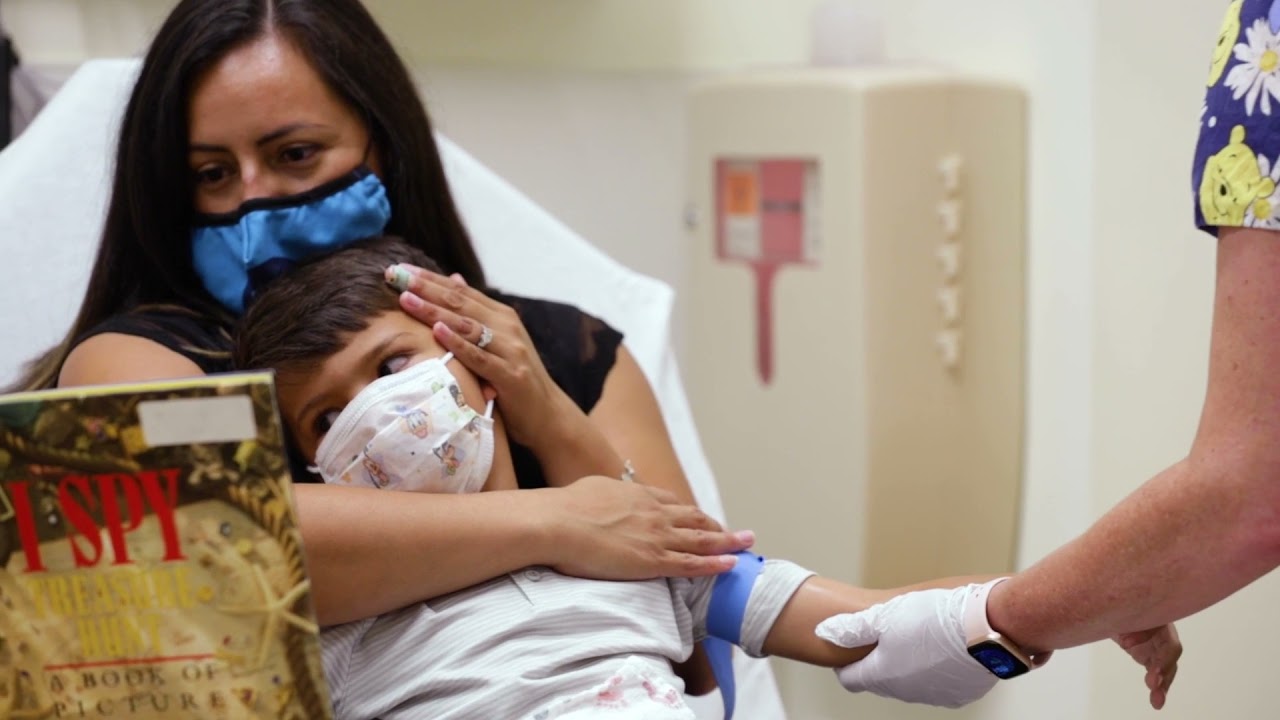
- Reading a book
Another great way to engage with distraction and comfort is through deep breathing. Practice taking some deep breaths with your child before, during and after the shot. Take a big breath through your nose, then blow out through your mouth. Take 3 to 5 of these breaths. For practice, you can have your child blow a pinwheel. You can also make a paper flower that your child can “smell’ and blow away.
Some clinics use cooling sprays, numbing creams or a device called a Buzzy. This is a small vibrating device that distracts nerves and reduces pain. You can purchase similar hand-held massage devices or ask your doctor’s office what they offer.
Other kids may prefer to watch the shot or needle poke to feel more in control. That’s OK too. Ask your child what feels most comfortable for them.
Try comfort positions
When doctors or caregivers force a child to lie down during a shot or needle poke, it can make them feel very vulnerable and more nervous. Let your child sit upright to feel more secure and confident. Physically comforting your child can also help. There are certain positions a caregiver can do with their kid during a needle poke to help them feel supported. You can try:
- Chest-to-chest: Hold your child facing you.
- Back-to-chest: Let your child sit in your lap, facing forward.
- Side-sit: Sit side-by-side with your arm around your child.
For infants, try to use the swaddle-and-hold position. The parent or caregiver can lay on the bed or exam table with their baby’s back against their chest. It can also be helpful for infants to breastfeed or suck on a pacifier during a needle poke. Gentle sucking can release feel-good hormones and lower stress. Caregivers can also ask their child’s care team for sucrose for their infants to feel less physical pain during a poke.
Want to learn more about comfort positions? Watch this video: https://www.youtube.com/watch?v=6b-CV6kXgVA
Work with your child’s care team
If your child is nervous about an upcoming shot or needle poke, feel free to speak up. You can ask your child’s care team what support is available to help make the experience more positive.
In fact, building a long-term relationship of trust between your child and their doctor will help them to feel more comfortable in future experiences. Advocate for your child if they are especially anxious and ask what resources or tools their doctor can offer to help reduce fear and pain. While many children receive shots or needle pokes at their normal doctor’s office, you can still advocate for your child’s comfort in other settings, such as the emergency department.
If your child has an appointment at Children’s Colorado, we have a team of child life specialists who are trained to help kids feel more at ease through age-appropriate explanations, play and comfort techniques. “Our job is to support kids through medical experiences,” Fisher explains. “We help empower them to feel more confident in a medical setting.”
Featured expert
Jennifer Liska
Child Life Specialist and Educator
Megan Fisher
Child Life Specialist and Educator


